2026 Dining Trends: What We're Manufacturing for Global Markets
From the Factory Floor: Why the Dining Table with One Bench Is Our Fastest-Growing Export Category
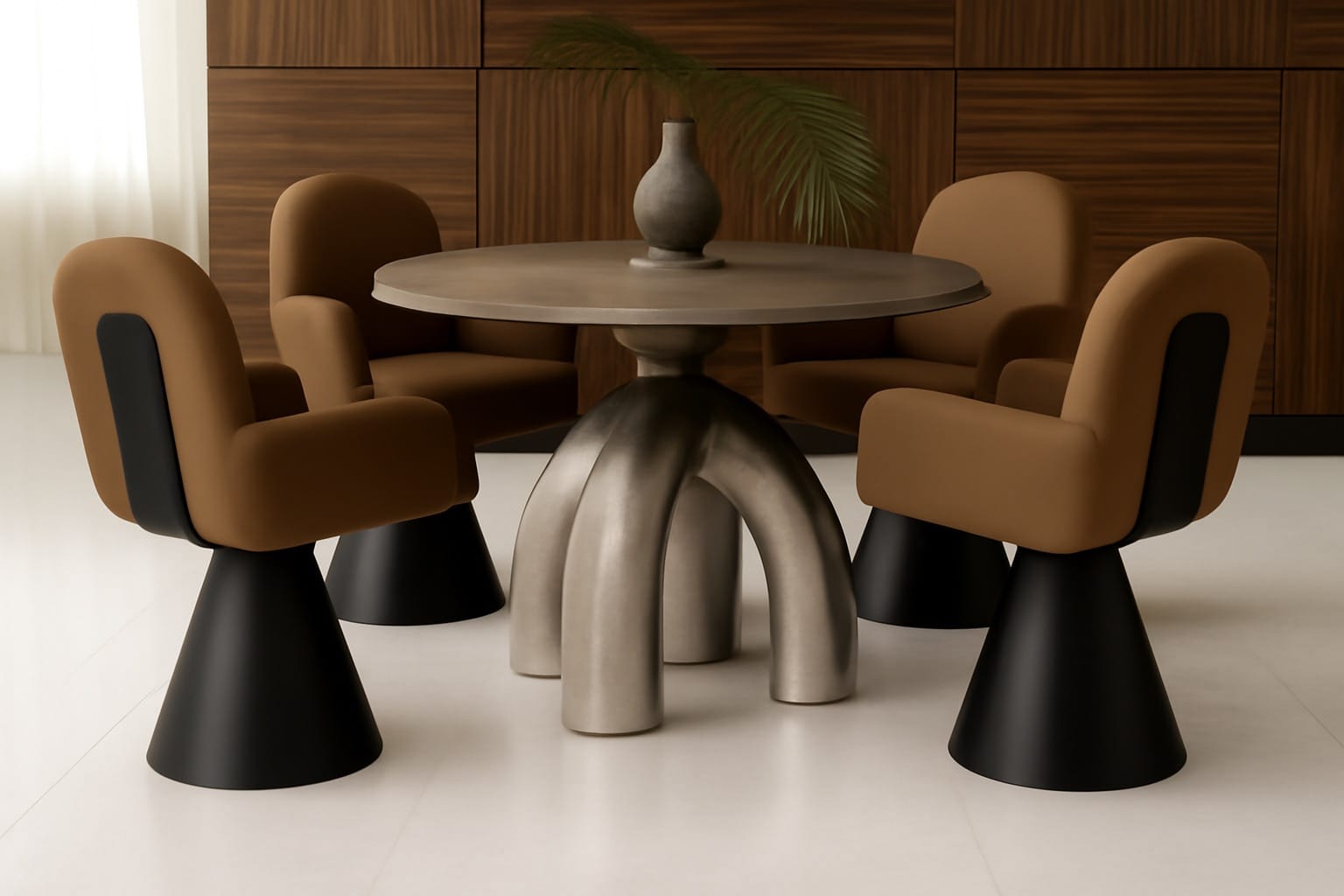
As a furniture manufacturer supplying retailers, interior designers, and hospitality projects across North America, Europe, and Asia, we don't just follow trends—we engineer them at scale. Every production cycle, we analyze global order data, container shipments, and client specifications to determine what's next in dining furniture. And if there's one configuration dominating our 2026 production lines, it's the dining table paired with a single bench.
This isn't a fleeting Pinterest moment. It's a structural shift in how the world eats, gathers, and lives. Below is an inside look at what we're manufacturing, why bench seating is leading our export volumes, and how factories like ours are adapting to meet global demand.
The Data Behind the Trend: Why Factories Are Scaling Bench Production
Our order books don't lie. In Q1 2026, dining sets featuring one bench + two to four chairs accounted for a 34% year-over-year increase in wholesale orders compared to traditional all-chair configurations. Here's what's driving factory output:
Space Economics Drive Manufacturing
Urbanization continues to shrink residential floor plans globally. Apartments in London, Toronto, Singapore, and Dubai simply don't accommodate six individual dining chairs with adequate circulation space. A single bench tucked against a wall or window eliminates the 24-inch clearance per chair requirement, allowing our clients to sell "full dining sets" to studios and compact open-plan homes that previously skipped the category entirely
.
The Hybrid Configuration Is King
The most requested SKU from our B2B clients isn't an all-bench set—it's the mixed configuration: one upholstered or wood bench paired with sculptural chairs on the opposite side. This setup allows retailers to hit multiple price points within one display set while offering consumers flexibility. We're now producing "modular bench programs" where the bench can be sold as an add-on rather than forcing a complete set purchase.
Manufacturing Insight: We're engineering benches with tapered legs and reduced-depth profiles (14–16 inches when tucked) so they slide completely under table aprons, reducing the visual footprint to nearly zero when not in use
.
What We're Manufacturing in 2026: Factory Trends & Production Specs
1. Curved Bench Programs for Oval & Round Tables
Our CNC routing departments are running more curved bench slats than ever. The 2026 market has moved decisively away from purely rectilinear dining sets. We're producing:
- Arched wood benches designed to complement 48"–60" round tables
- Radius banquettes for hospitality clients (restaurants, co-working spaces) requiring fixed seating
- Pill-shaped bench tops that echo the organic table silhouettes trending in Milan and High Point
Production Note: Curved benches require 15–20% more raw material due to offcuts, but the wholesale markup supports the cost. We're mitigating waste by using finger-jointed hardwoods for curved components, which also prevents warping in variable climates during container shipping.
2. Performance Upholstery at Factory Level
Retailers are demanding stain-resistant, commercial-grade fabrics straight from the factory—not as aftermarket add-ons. Our upholstery lines have shifted to:
- Crypton and Sunbrella contract fabrics for dining benches
- Bonded leather and PU alternatives that pass 50,000+ double rub tests
- Dark-ground abstract patterns that hide wear in high-traffic hospitality settings
This shift means we're now offering fully upholstered bench production as a standard SKU rather than a custom upcharge, reducing lead times from 8 weeks to 3–4 weeks.
3. Built-In Storage & Multifunction Engineering
For our European and Japanese markets where square footage is at an absolute premium, we're manufacturing benches with integrated storage mechanisms:
- Gas-lift hinged seats for linen and tableware storage
- Drawer-pull benches with soft-close hardware
- Modular cubby systems beneath banquette seating
These require precision joinery and hardware sourcing, but the perceived value allows for a 40% higher wholesale price point while remaining accessible to the mid-market consumer
.
4. Warm Wood Species & Cerused Finishes
Our finishing booths have retooled for 2026's "quiet luxury" palette. The cold gray-washed woods of 2022–2024 are officially retired. Current production focuses on:
Table
| Wood SpeciesFinishTarget Market | ||
| White Oak | Cerused/Limed | North America, UK |
| Walnut | Natural Oiled | Premium EU, Australia |
| Ash | Honey Tone | Scandinavian markets |
| Rubberwood | Painted Matte | Budget-friendly global retail |
We're seeing particular demand for mismatched bench-to-table finishes—for example, a walnut table with a black-painted bench, or natural oak with a boucle-upholstered seat. This "intentionally curated" look requires us to maintain more SKUs but reduces the commodity feel of matched sets
.
The "One Bench" Formula: Engineering the Perfect Dining Set
After producing thousands of units, our R&D team has identified the optimal proportions that minimize returns and maximize customer satisfaction:
Standard Factory Specifications We Recommend to Clients
Table
| ComponentSpecificationRationale | ||
| Bench Seat Height | 18"–19" | Aligns with standard dining chair seat height |
| Table Overhang | 3"–8" beyond bench edge | Allows knee clearance without wasted space |
| Depth (Tucked) | 14"–16" | Slides fully under table apron |
| Depth (Seating) | 16"–18" | Comfortable for 2–3 hours of sitting |
| Length per Person | 24" minimum | Prevents shoulder crowding at 2-person benches |
| Backrest Height | 16"–20" (if upholstered) | Supports lower back without blocking sightlines |
Critical Manufacturing Detail: We always recommend that our B2B clients specify a bench 4–6 inches shorter than the table length. This prevents the bench from visually "competing" with the table edge and allows the chairs on the opposing side to define the set's boundaries.
Global Market Breakdown: What Different Regions Are Ordering
Our container shipments reveal distinct regional preferences that inform our production schedules:
North America (USA & Canada)
- Preference: Farmhouse and transitional styles
- Top SKU: 72" reclaimed-look table with one X-base bench + 4 upholstered Parsons chairs
- Material Driver: Performance fabrics due to family dining and pet ownership
- Price Point: Mid-market ($800–$1,400 retail)
European Union (Germany, France, Netherlands)
- Preference: Minimalist, FSC-certified sustainable timber
- Top SKU: Compact 55" oak table with integrated wall bench (banquette-style)
- Material Driver: Eco-certifications and natural oil finishes
- Price Point: Premium ($1,200–$2,200 retail)
Asia-Pacific (Australia, Singapore, Japan)
- Preference: Space-saving, multifunctional
- Top SKU: Round 47" sintered stone table with curved leather bench
- Material Driver: Sintered stone tops for heat resistance and easy cleaning
- Price Point: Upper-mid to luxury ($1,500–$3,000 retail)
Middle East (UAE, Saudi Arabia)
- Preference: Statement pieces, gold/brass accents
- Top SKU: Marble-veneer table with velvet-upholstered bench with metal legs
- Material Driver: Luxe aesthetics for entertaining culture
- Price Point: Luxury ($2,000+ retail)
Customization & OEM: What Factories Can Offer in 2026
Modern furniture manufacturing isn't just about volume—it's about flexible customization without losing economies of scale. Here's how we're structuring our production to support client brands:
Made-to-Order Bench Dimensions
We maintain "cutting templates" for bench lengths from 36" to 84" in 6-inch increments, allowing retailers to offer "custom sizing" without true one-off production costs.
Private Label Upholstery
Our clients can select from 40+ stock fabrics or provide COM (Customer's Own Material). We handle cutting, foam application, and attachment—critical for brands wanting unique colorways without operating their own upholstery facilities.
Knock-Down (KD) Construction for E-Commerce
For direct-to-consumer brands, we engineer benches with flat-pack KD legs that attach via hidden hardware. This reduces shipping cube by 60%, allowing container loading of 400+ bench units versus 120 fully assembled units.
Sustainability From the Source
Global buyers are increasingly auditing factory practices before placing orders. Our 2026 production incorporates:
- FSC-certified hardwoods for EU and North American compliance
- Water-based finishes with VOC levels under 0.5% to meet California CARB standards
- Recycled foam in upholstered benches (30% post-industrial content)
- Optimized nesting software to achieve 92%+ wood yield, minimizing factory waste
Sustainability isn't just marketing—it's becoming a gating factor for wholesale contracts. Retailers need documentation, and factories that can't provide chain-of-custody paperwork are losing bids to competitors who can.
Conclusion: Why Your Inventory Needs a Bench Program in 2026
The dining table with one bench isn't a niche product anymore—it's becoming the default configuration for modern dining. From our factory perspective, it solves real problems: it ships efficiently, it appeals across demographics, it works in small spaces, and it offers higher perceived value than a basic table-and-four-chairs set.
For retailers, designers, and hospitality buyers, the message is clear: if your 2026 catalog doesn't include a dedicated bench program, you're leaving margin and market share on the table.
Ready to specify your next collection? Our production lines are booking Q3 and Q4 capacity now. Whether you need container-load quantities of standard SKUs or a fully customized private-label dining program engineered to your exact specifications, we're manufacturing the future of dining furniture—one bench at a time.